FKINP
FKINP For a US deposition, compare court reporting services using the same capture method, final-transcript requirements, realtime access, rough-draft deadline and remote-support scope. Veritext and Optima Juris are actual service providers that can be compared on those dimensions. A federal court transcript framework belongs in procedural context, rather than serving as a competing vendor or a private-deposition price quote.
Define the record and deliverables first
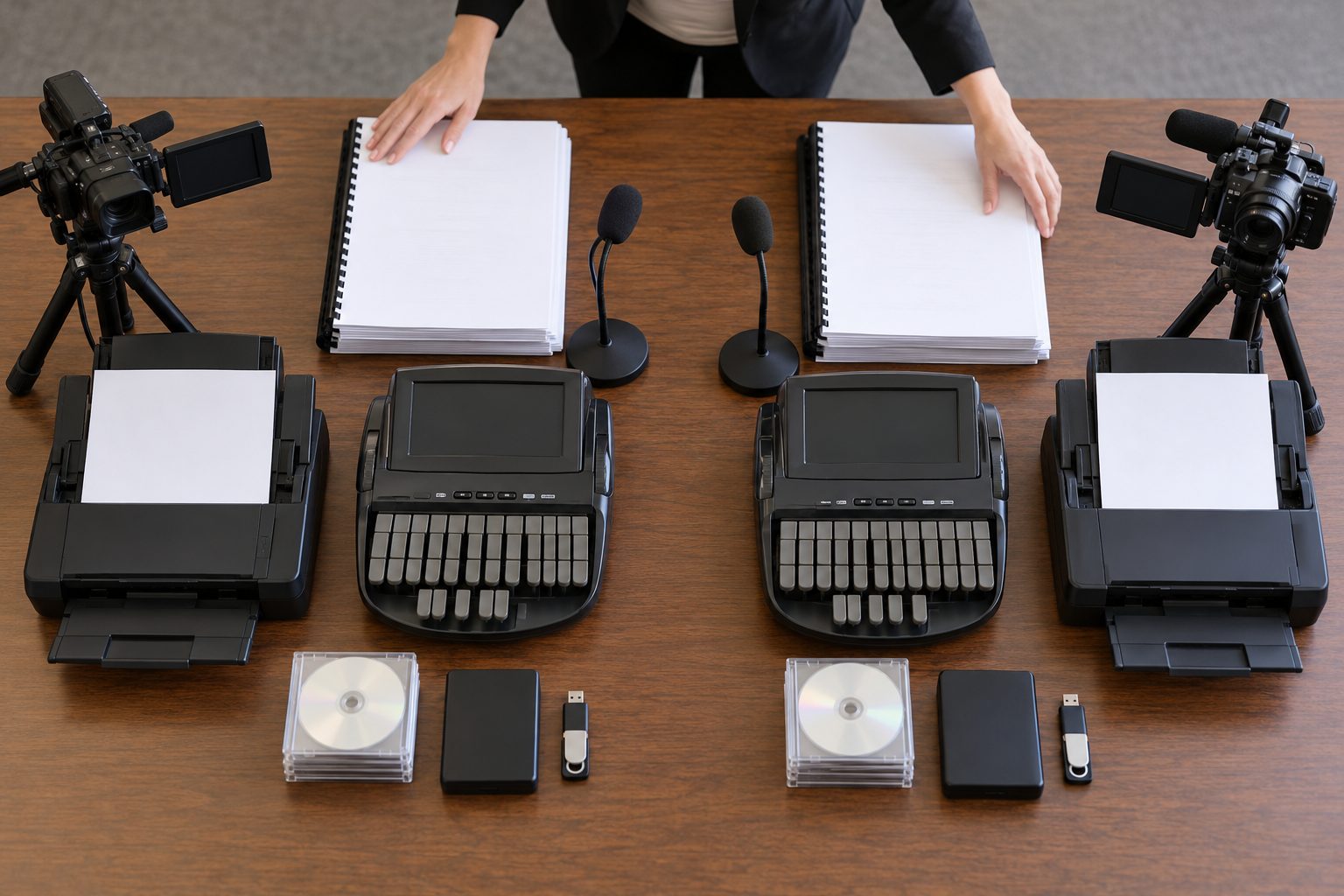
Give counsel and the scheduling team a common brief: case and jurisdiction, witness and participant locations, date, time zone, expected duration, technical subject matter, interpreter needs and exhibit types. Ask counsel to confirm the permitted recording method, oath arrangements and any applicable stipulation, order or local requirement before finalizing the booking.
Separate the deliverables in the request for quotation. A live feed, an unedited rough draft, an ASR-generated transcript and a final certified transcript should not receive the same acceptance label. Name the required capture method and who prepares, checks and certifies the final record. If a provider offers more than one method, ask which one the quote actually supplies.
Compare two providers using matching categories
Veritext
- Final record: Its service-information page describes transcript and litigation-package options, including an electronic transcript and scanned exhibits.[1]
- Realtime and rough draft: Veritext describes realtime services and a rough-draft option before proofreading and finalization. Its terms state that the rough draft is not the certified transcript and describe a final-transcript purchase requirement.[1]
- Supporting services: Ask for separate confirmation of videography, synchronization, remote hosting and technical support. Do not assume they are included in the transcript package.
- Quote check: Ask which transcript, exhibit, appearance, format and expedited-delivery charges are included. The published service description identifies multiple charge categories, rather than one all-inclusive deposition price.[1]
Optima Juris
- Final record: Optima describes stenographic court reporting for US and international depositions. It separately describes an AI-assisted SmartTranscript+ service with certified court reporter oversight and human review.[2] Specify which method and final deliverable the booking includes.
- Realtime and rough draft: Its service page lists realtime and expedited transcript options.[2] Ask whether a rough draft is included for the selected method, how it is labelled and when the final certified transcript will follow.
- Supporting services: Optima describes remote hosts, exhibit presentation and breakout-room support; its videography guidance discusses video deliverables and synchronization.[2][3]
- Quote check: Price reporting, realtime recipients, rough drafts, remote support, video and synchronization separately. Do not treat a general speed or cost claim as a guarantee for the selected assignment.
These are first-party service descriptions, not independent comparisons of accuracy, availability or outcomes. Obtain written confirmation of local coverage, assigned personnel and the exact service version. A broad network claim is different from a confirmed reporter for the scheduled date and location.
Check qualifications against the actual assignment
NCRA describes its Certified Realtime Reporter credential as a certification of realtime proficiency.[4] If realtime is important, ask about the assigned reporter’s relevant credential and experience with the required feed. Separately confirm any jurisdiction-specific licence, oath authority and other requirements with counsel; an association credential is not a substitute for checking the legal requirements of the assignment.
Give the reporter the permitted case caption, participant names, technical vocabulary and other agreed preparation material. Ask who covers an unavailable reporter, how a replacement’s method and qualifications are approved and how the team is notified. Include a named contact for scheduling and delivery problems.
Request an itemized, comparable quote
Use the same fictional scenario in both quotes: one witness, one day, a specified number of realtime recipients, a rough draft by an agreed time and a final transcript by a separate deadline. Add a videographer, remote technician and exhibit services only where required. The scenario is a comparison tool, not an industry-standard package.
- Attendance: appearance fee, minimum hours, overtime, waiting time, travel and time-zone treatment.
- Transcript: original and copy pricing, chargeable pages, indexes, certification pages and minimum orders.
- Speed: rough-draft charge, expedited final charge, deadline definition and the point from which turnaround is measured.
- Technology: realtime connections or recipients, platform, technical support and any required equipment.
- Video and exhibits: videographer attendance, synchronization, formats, exhibit handling, scanning and copies.
- Changes: cancellation, postponement, late schedule changes, extra witnesses, taxes and payment terms.
Veritext’s page describes per-page transcript charges, separate package or format charges and an additional percentage for expedited transcripts.[1] Use those as prompts for an itemized quote rather than assuming identical practices at another provider. Have each bidder calculate the same scenario and explain what can change the final invoice.
Rehearse the remote workflow
Request a technical check with the participant roles that matter: witness, examining counsel, other counsel, reporter, interpreter, videographer and technician where included. Check audio, identity and attendance procedures, feed access, exhibit presentation, marking and the method for transferring the final exhibit set to the reporter. Counsel should settle the procedural protocol.
Run a fictional interruption during the rehearsal. Confirm who pauses the proceeding, records the interruption, restores the connection and decides when to resume. Ask how the team distinguishes an intentional off-record discussion from a connection failure. Verify the contingency arrangements and contact details before the event, rather than treating a working video link as a complete service test.
Accept delivery against the booking
Check the final transcript’s case details, witness, date, certification, required format and agreed exhibits. For video, test playback and any purchased synchronization. Confirm that rough products remain clearly labelled and that the team knows which file is the final deliverable. Route corrections and procedural questions through the agreed process.
Choose the provider whose assigned personnel, capture method, tested logistics and itemized terms match the matter. Retain the booking, approved changes, delivery receipts and invoice reconciliation so the service can be assessed against the actual order.
References
- Veritext — Service Information: transcripts, rough drafts and charge categories (veritext.com)
- Optima Juris — Court Reporting and Deposition Services (optimajuris.com)
- Optima Juris — Deposition Videography: What Legal Teams Should Expect (optimajuris.com)
- NCRA — Certified Realtime Reporter credential (ncra.org)