FKINP
FKINP Prepare for legal review by mapping each patent and application from its starting owner through every transfer, reading each agreement for conveyed rights, and keeping execution evidence separate from USPTO recordation.[1][6]
Compare review and recordation options
Choose by task: counsel and legal-services marketplaces can address legal review.[5][6] Forms and guidance can aid preparation, while recordation support and screening software serve narrower workflow functions.[7][8][9]
Henry Patent Law
Service model: Counsel-led patent-assignment assistance; the firm says it works with technology businesses on patent assignments.[5]
Verified scope: Its guidance covers employee and contractor assignments, patent-specific instruments, execution before filing, added new matter and USPTO recordation.[5]
Suited to: A company seeking a direct legal-review candidate rather than stand-alone workflow support, subject to confirming the engagement scope.[5]
UpCounsel
Service model: A US legal-services marketplace through which companies can seek patent attorneys.[6]
Verified scope: Listed services include agreement review, ownership assessment, corrective or new assignments and USPTO recordation.[6]
Suited to: A company that wants to compare marketplace counsel instead of approaching a preidentified firm.[6]
Cooley GO
Service model: US-focused guidance and forms, including materials for California employee invention assignments and US consultant agreements.[7]
Verified scope: Its checklist addresses the writing, parties, property, consideration, acknowledgment or witnessing, and prompt USPTO recordation.[7]
Suited to: An internal team organizing documents and an issue list before counsel review, rather than seeking matter-specific advice from a form library.[7]
PerspireIP
Service model: Chain-of-title and recordation support.[8]
Verified scope: It advertises diligence, drafting support, monitoring and an obligation register. Its stated workflow uses the USPTO Assignment Center and a 37 CFR 3.31 cover sheet while recording each transfer link and affected family member.[8]
Suited to: A portfolio requiring operational tracing or recordation support; legal conclusions should be scoped separately because recordation is not a USPTO determination of ownership or validity.[1][8]
GC AI
Service model: Software-assisted agreement screening.[9]
Verified scope: It advertises checks for operative language, scope, inventor signatures, consideration, further assurances and powers of attorney, with quoted clause-level output and reusable Playbooks.[9]
Suited to: A legal team conducting repeat first-pass screening, not an independent determination of title or agreement validity.[1][9]
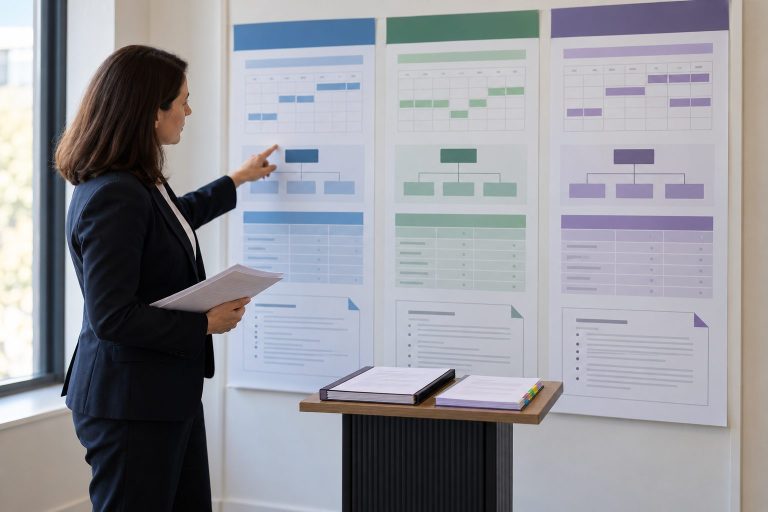
Build a property-by-property chain-of-title ledger
Create a separate ledger entry for every patent, application and relevant family member. Record the property number, title, filing date, inventors, original applicant, asserted current owner and status, then link the supporting agreements and USPTO records.[6] Keep inventor, applicant, original grant assignee, latest recorded assignee and asserted legal owner as separate fields because they may identify different parties.[6]
Determine the starting owner by filing date. For applications filed on or after September 16, 2012, the original applicant is presumed to own the application; for earlier applications, ownership initially vested in the named inventors.[1] An inventor or partial assignee can transfer only that party’s interest, so confirm every interest holder’s place in the chain before treating a downstream entity as the complete owner.[1]
- Map each transfer: Record the assignor, assignee, execution date, recording date, conveyance description, affected properties and reel-and-frame reference. The assignee receiving one transfer should connect to the assignor making the next; otherwise, flag the break.[6]
- Search by property first: Use the patent or application number where possible. Supplement it with assignor, assignee and reel-and-frame searches, recognizing that name searches can return spelling variants, predecessor entities and unrelated parties.[6]
- Classify the evidence: Preserve founder, employee, contractor, acquisition and portfolio-transfer documents. Label mergers, name changes, corrective filings, security interests and releases separately rather than grouping everything as an assignment.[6]
Do not treat a recorded security interest as an outright ownership transfer without reading its terms. It may represent collateral, and later releases or financing documents may affect the chain.[6]
Test what the written agreement conveys
Start with the operative words, not the document title. An assignment transfers all or part of the transferor’s right, title and interest. A license transfers less than the entire ownership interest and may be limited by time, geography or field of use; even an exclusive license is not an assignment.[1]
Have counsel check the transfer clause against the parties’ complete legal names, consideration, governing law, signatures, amendments, successor language, further-assurance duties and any power of attorney.[2][7][9] Match every defined term and property schedule to the chain-of-title ledger.
The scope analysis should address provisionals, continuations, continuations-in-part, divisionals, reissues, reexaminations, extensions or renewals, foreign counterparts, priority rights, and prosecution and maintenance rights.[2][9] It should also identify whether claims and recoveries for past infringement are expressly conveyed.[2][9]
The SEC-filed Flex Pharma agreement illustrates detailed drafting: it identifies related filings and conveys worldwide title, priority rights, prosecution and maintenance rights, plus claims and recoveries for past, present and future infringement.[2] It is an example rather than a universal form; its transaction terms and Massachusetts governing-law provision may not fit another deal.[2]
Flag retained rights, territorial or field-of-use restrictions, covenants not to sue, competing claimants and joint ownership.[1][2][6] Unless an agreement provides otherwise, each joint patent owner may make, use, offer to sell or sell the invention in the United States, or import it, without the other owners’ consent or an obligation to account to them.[1]
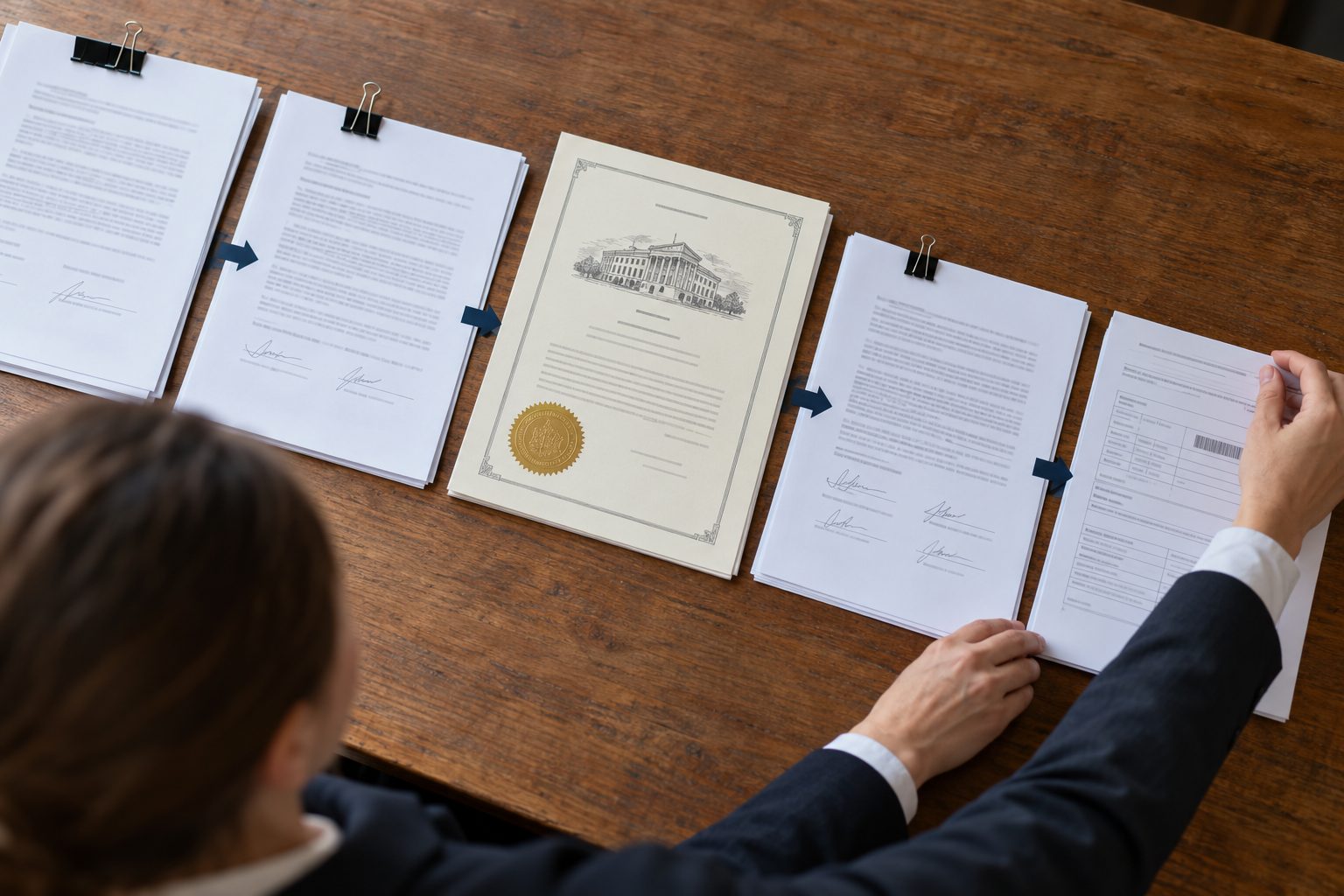
Separate execution from USPTO recordation
Do not treat a reel-and-frame entry as proof that the named assignee obtained good title. Patents have the attributes of personal property, and a patent, application or interest in either may be assigned through a written instrument.[1][3] Whether the instrument is valid and how its terms should be interpreted depend on the relevant state or other jurisdictional law; the USPTO does not interpret that law or serve as transaction counsel.[1]
USPTO recordation provides public notice through a ministerial process. It is not a USPTO determination that the agreement is valid, the assignor owned the stated rights or the document produced the ownership effect claimed on its cover sheet.[1] Counsel must therefore examine the executed instrument and the transferor’s chain of title, not merely the database entry.[1]
Recordation can still matter procedurally. A patent may issue to an assignee only when the assignment has been recorded or filed for recordation. Recordation in the assignment database alone may not allow the assignee to act in an application, patent or proceeding; separate placement in the relevant file may be required.[1]
A qualifying acknowledgment can serve as prima facie evidence that the instrument was executed, but 35 U.S.C. § 261 does not state that acknowledgment creates the assignment.[1][3] The exact electronic-recordation fee and complete Assignment Center submission specifications are not confirmed here; verify both directly with the USPTO before filing.
Package the evidence for counsel
Provide one organized review package rather than a folder of database results:
- Ownership evidence: The master ledger and family map, every operative agreement and amendment, complete property schedules, signature pages, and evidence connecting mergers or corporate-name changes.[6][8]
- USPTO evidence: Document images, submission or recordation confirmations, and reel-and-frame references for each affected patent or application.[6][8]
- Transaction records: Executed originals or reliable copies, related financing and release documents, and the internal deal file. Assignment-database entries should supplement, not replace, the underlying evidence.[6][8]
Add an exception log naming the affected property, missing evidence, suspected defect, issue requiring review, responsible owner and next action. Escalate missing inventor signatures, inconsistent entity names, properties omitted from schedules, transferors with no demonstrated title, competing claimants and unrecorded transfers.[6]
Also flag unreleased security interests, unclear retained rights and instruments that may be licenses rather than assignments. A security interest may represent collateral instead of an ownership transfer, while a license conveys less than the entire ownership interest even when exclusive.[1][6]
Define counsel’s scope separately for agreement validity, chain-of-title conclusions, corrective instruments, USPTO recordation, procedural filings, and any formal opinion or diligence report. Remedies for title defects, state-law validity and litigation standing may require separate analysis.[1][9]
What to confirm with each provider
The cited pages for Henry Patent Law, UpCounsel, Cooley GO, PerspireIP and GC AI do not state pricing, minimum commitments, contract length, cancellation or refund terms, defined state-by-state coverage, or quantified performance evidence.
- Scope: Which properties, agreements, title links and recordation filings are included, and which legal conclusions are excluded?
- Personnel and output: Who performs or supervises the work, and will the provider deliver a property-level ledger, exception log or legal analysis?
- Commercial terms: What are the total fees, minimum commitment, contract term, cancellation rights, refund terms and security requirements?
- Evidence: Request a redacted sample showing how missing signatures, broken title links and uncertain conclusions are reported.
References
- 301-Ownership/Assignability of Patents and Applications (uspto.gov)
- patent assignment agreement (sec.gov, 2014)
- 35 U.S. Code § 261 – Ownership; assignment | U.S. Code | US Law | LII / Legal Information Institute (cornell.edu)
- Patent Assignment: How to Transfer Ownership of a Patent (henry.law)
- Check out this article…Patent Assignment Search: Find USPTO Ownership Records (upcounsel.com, 2026)
- Who Owns What: Patent Assignment and Ownership (cooleygo.com)
- Patent Assignment Recordation: 7 Essential USPTO Rules (perspireip.com, 2026)
- Patent Assignment Agreement: Six Checks Before a Buyer Asks · GC AI (gc.ai)