FKINP
Ask how the suit will be made and corrected
For a US tailoring order, compare the pattern method, fitting stages, garment specification and correction terms. Start with the fit problem and intended use, then ask each tailor to explain how the proposed service addresses them. The word “bespoke” alone should not decide the purchase.
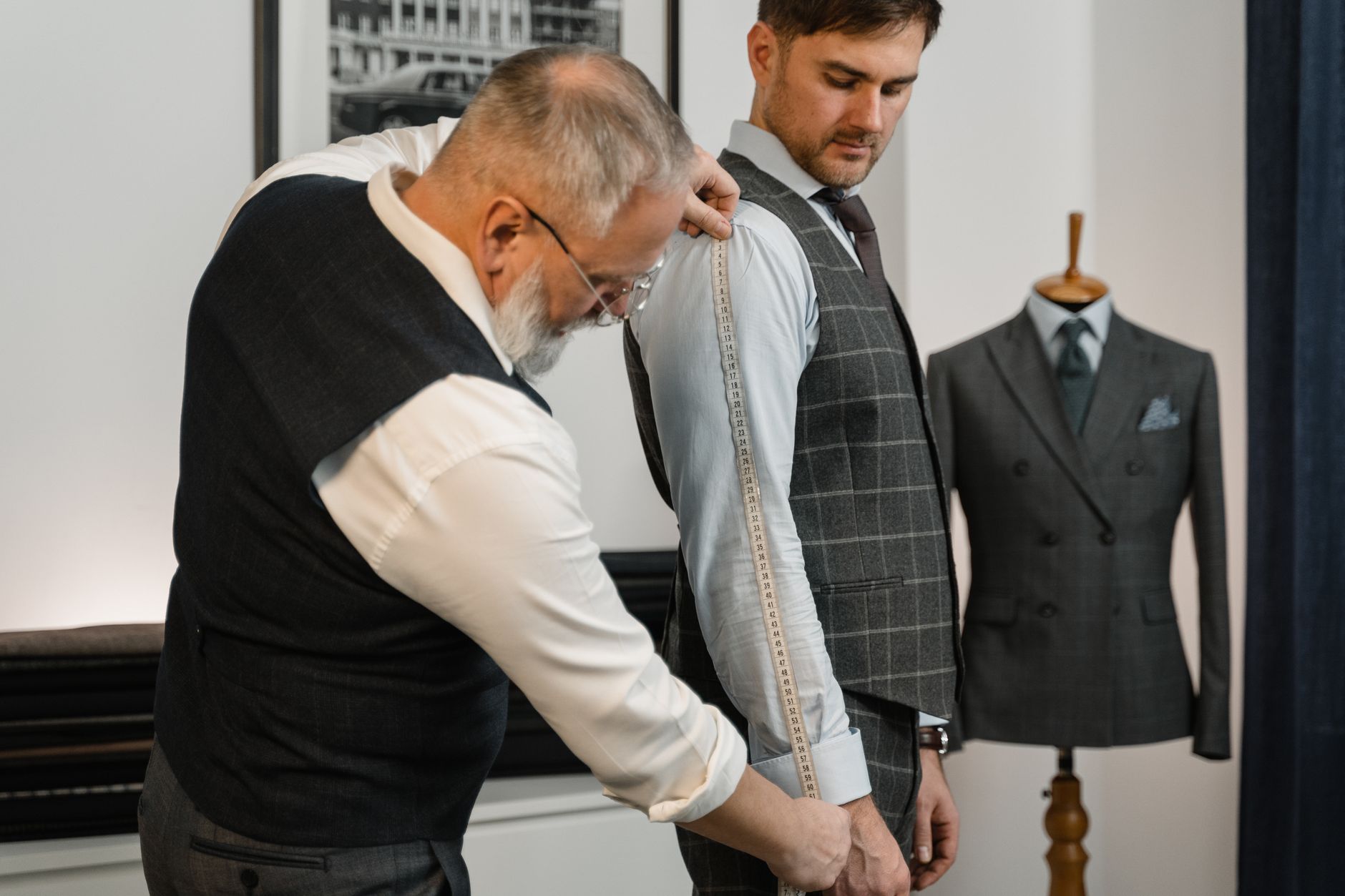
The two examples here have New York service locations. Their descriptions illustrate their own processes rather than a legal definition or a guarantee of fit across the American market.
Huntsman: a New York appointment with a documented baste stage
Huntsman’s services page identifies its New York atelier and worldwide trunk shows as routes for clients outside London. It describes garments made at 11 Savile Row and a minimum of three fittings for its bespoke service.[1] A US appointment therefore does not imply that cutting and making take place in the United States.
Its process page describes a cutter taking measurements and assessing stance before drafting an individual paper pattern. The first baste is temporarily assembled so fit, balance and proportions can be assessed before permanent sewing. Later fittings refine the garment, and the pattern is retained for future commissions.[2]
Ask which appointments will occur in New York or at a trunk show, who makes the corrections and what happens if an extra fitting is needed. A published minimum count does not establish the number of journeys your order will require.
Cad & The Dandy: confirm the chosen construction option
Cad & The Dandy identifies a New York bespoke service and permanent Midtown location.[4] Its “Bespoke Essentials” process article describes consultation, cloth and style selection, measurements and a unique paper pattern retained for later orders.[3]
The article says the garment may arrive for fitting as a baste, standard with its full bespoke construction option, or in finished form.[3] Ask which construction option is actually on the quote. Do not infer the same unfinished fitting stage from every garment carrying the house name.
Have the tailor state what is assessed at the first try-on and which changes remain possible. Compare those answers with Huntsman’s published baste process, without treating either supplier’s account as independent evidence of better fit or durability.
Compare the pattern and correction stages on paper
Ask the provider to select and describe the route it is selling:
- Individual pattern: how is it drafted for you, where is it stored and how will fitting changes update it?
- Modified existing pattern: which measurements and posture adjustments are incorporated before production, and which changes wait until the garment arrives?
- Finished garment with alterations: which fit issues can be corrected on that actual garment, and which changes will the tailor decline?
These are comparison questions, not promises that all providers use identical terminology or methods. Ask to see a sample at the stage being discussed and garments with the silhouette you want. Evaluate the proposed process against your specific requirements.
Write the garment specification before cutting
Record the cloth reference, lining, colour, intended use, jacket silhouette and trouser shape. Specify lapels, pockets, vents, buttons, rise and any other details important to you. If canvas construction, particular handwork or functioning sleeve buttons matter, list each feature rather than assuming a label includes it.
Explain where existing clothes fail: collar position, shoulder line, sleeve angle, movement, sitting comfort or left-to-right differences. Ask the tailor which stage addresses each concern. Agree how photographs, notes and the approved specification will be used during the final review.
Request the alteration reserve left in the garment and the later changes it would permit. An assertion that a suit can be altered does not identify how much usable cloth remains or what a future alteration would cost.
Request a US quote and a workable appointment schedule
Request a dated total explicitly in US dollars for the same number of garments and cloth level. Separate deposit, taxes, shipping, travel, trunk-show appointments and any additional-fitting charges. Huntsman’s cited global services page displays sterling pricing, which should not be treated as a confirmed US-dollar offer.[1]
Work backwards from the event date, allowing the tailor to specify consultation, first construction fitting, later try-ons and final delivery. Ask how delays, a missed trunk show or an unresolved fit problem affect the plan. If the schedule is tight, assess an available finished garment with a documented alteration plan rather than assuming a custom order can be rushed.
Agree acceptance, corrections and aftercare
Before payment or cutting, obtain the cancellation terms, expected completion date and procedure for a missed deadline. Ask who decides whether an issue needs alteration or remake, what is included, how soon a problem must be reported and who pays for return travel or shipping.
At final fitting, compare the garment with the agreed specification and describe any unresolved issue before accepting it. Ask for care instructions and the price or scope of later adjustments. Choose the service whose documented process, practical schedule and correction commitments answer your needs.
References
- Huntsman bespoke services: New York availability, making location and minimum fittings (huntsmansavilerow.com)
- Huntsman bespoke process: individual pattern, baste and later fittings (huntsmansavilerow.com)
- How it Works: The Bespoke Essentials — Cad & The Dandy (cadand-thedandy.com)
- New York store and bespoke services — Cad & The Dandy (cadand-thedandy.com)