FKINP
Compare professional shoe-repair and manufacturer-recrafting proposals by documenting eligibility, what each service removes and replaces, materials, exclusions and the expected result.
Compare local repair with manufacturer recrafting
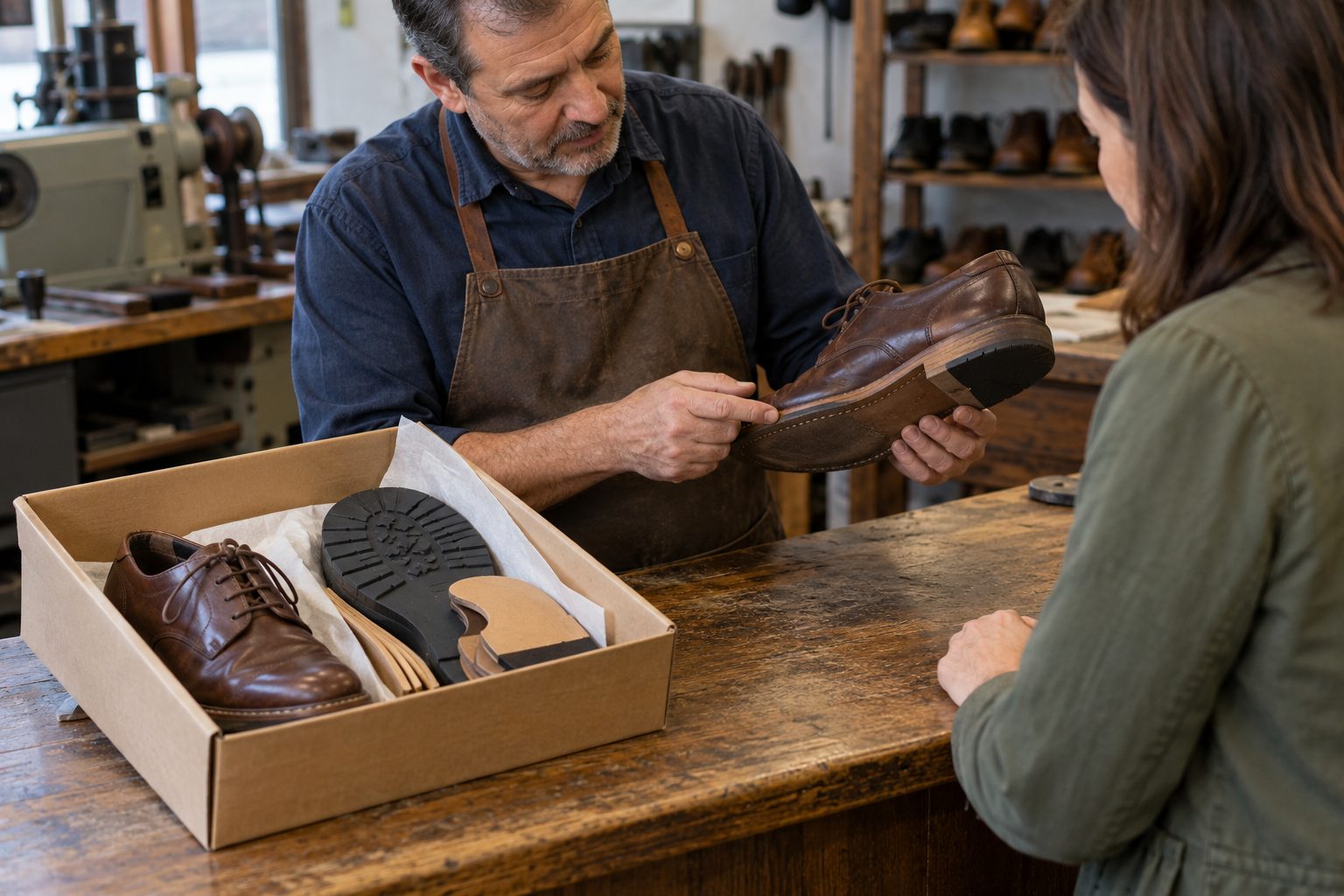
A local repair menu and a manufacturer recrafting package are not equivalent unless their eligibility, physical work and quote terms align.
Lebanon Leather Work: local repair example
- Eligibility: The New Jersey workshop accepts repairable genuine-leather footwear, including dress shoes, leather boots and leather sneakers with genuine-leather uppers.[3]
- Physical scope: Its menu distinguishes heel-tip replacement from stack rebuilding, half soles from adhesive or welt-stitched full resoles, and partial color work from a complete re-dye and finish.[3]
- Quote basis: Lebanon Leather Work says material cost and shoe condition affect its ranges, with the quote confirmed after a free assessment.[3]
Allen Edmonds: manufacturer recrafting inquiry
- Eligibility: Ask Allen Edmonds to confirm whether the exact model qualifies and whether previous alterations affect acceptance.
- Physical scope: Request an itemized description of what the offered package removes, retains and replaces.
- Quote basis: Obtain the package price, replacement materials, turnaround and shipping terms in writing.
The cited pages do not establish Allen Edmonds’ package components, eligibility rules, prices, materials, turnaround or cancellation terms. Treat manufacturer eligibility as brand- and model-specific rather than applying one company’s answer to another.
Local price example: Lebanon Leather Work’s page, marked “Aug 6” without a year, lists heel tips at $15–$30, stacked-heel rebuilding at $40–$75, half soles at $45–$85, adhesive full resoles at $65–$100 and welt-stitched full resoles at $90–$150 per pair.[3] These are one workshop’s ranges, not national prices.
Identify the construction and structural damage
Before approving work, ask the provider to identify whether the shoe is Goodyear welted, Blake stitched or adhesive/cemented.[1][3]
- Structure: Inspect the welt, insole board and attachment between the upper and sole.[1][3]
- Upper: Note the leather grade, moisture condition, cracks, tears and weak areas.[1][3]
- Wear: Check the sole material and wear pattern, heel, hardware, stitching and lining.[1][3]
Stitched or welted shoes can be disassembled and resoled multiple times when supporting components remain sound. Adhesive-only shoes may be rebonded, but Lebanon Leather Work says durability depends on construction and conditions of use.[1][3]
Component-level problems include worn or detached soles, damaged heel tips or stacks, loose stitching, broken hardware, flattened insoles and localized finish loss.[3][4] Structural warning signs include a soft, uneven or crumbling midsole; deep flex-point splits; wobbling or asymmetry; collapsed counters or shanks; lost support; or persistent discomfort.[1]
Because photographs may not reveal an underlying heel attachment or other concealed damage, request a physical assessment before final approval.[5] Full-thickness upper cracks, widespread midsole degradation, separation from the lasting board in several areas, collapsed internal support or an upper too weak to hold stitching can make repair impractical.[3][4]
Compare what sole and heel services change
Use the same removed-retained-replaced format for every proposal.
Half sole
- Removed: The worn sole section from the ball to the toe.[3]
- Retained: The sound heel-side section of the sole.[3]
- Replaced: The forefoot section, which suits wear concentrated at the ball and toe.[3]
Full resole
- Removed: The worn sole from heel to toe.[3]
- Retained: The quote should identify which structural components remain.
- Replaced: The complete sole. In welted work, the repairer inspects the welt, repairs it if necessary, and stitches or bonds the replacement sole into place.[3]
Protective sole cover
- Removed: Ask what surface preparation is required.
- Retained: The original sole remains in place.[5]
- Added: A protective layer goes over the existing sole; this is not a full resole.[5]
Heel tip or cap
- Removed: The bottom wearing piece.[3][4]
- Retained: The heel stack when it remains sound.[3][4]
- Replaced: The bottom tip or cap.[3][4]
Full stacked-heel rebuild
- Removed: The quote should specify how much damaged stack material will be removed.
- Retained: The proposal should identify any sound heel components that remain.
- Rebuilt: The damaged heel stack. Wear extending into the stack can distort the shoe and require more extensive work than replacing a cap.[3][4]
For each service, record what comes off, what stays, the replacement component, the attachment method and any adjacent damage excluded from the quote.[3][5]
Define upper, lining, stitching and hardware work
Match each problem to a separate task rather than treating upper restoration as a catch-all:
- Seams and hardware: List resewing with color-matched thread, zipper adjustment or replacement, and eyelet replacement separately.[3][4]
- Interior, fit and protection: Identify insole replacement, width or vamp stretching, and waterproofing individually. Bespoke Unit’s guide and the repair-provider descriptions treat these as distinct services.[2][3][4]
- Color: Distinguish partial restoration of one area or panel from re-dyeing and refinishing the complete shoe.[3]
- Lining: Ask whether the proposal covers a local patch or more extensive replacement. FEIT and Lebanon Leather Work identify lining as an inspection point but do not define a standard full-lining procedure on the cited pages.[1][3]
Upper reconditioning can include deep cleaning, moisturizing, dye work, color matching and refinishing.[1][3] Surface creases may be managed with conditioning, but deep cracks are structural failures requiring an assessment rather than cosmetic treatment alone.[1][3]
Put materials, contingencies and exclusions in writing
Use this checklist for each quote:
- Construction: Identify the shoe as welted, stitched or adhesive/cemented.
- Components: State what will be removed, retained and replaced, including sole, welt, heel-cap, heel-stack and attachment work.
- Materials: Specify sole and heel material, color, thickness and tread, plus the stitching or bonding method.
- Appearance: Record the expected color and finish, whether cleaning or refinishing is included, and which marks or damage will remain.
- Exclusions: List work outside the quote and explain how concealed damage will be handled.
- Approval: Record the total, turnaround and process for authorizing additional work or cost.
Ask what happens if disassembly reveals a damaged welt, heel attachment or another problem photographs did not show. Set a stop-work limit or require written authorization before additional work begins.[5]
Replacement soles, eyelets, stitching patterns or maker-specific details may differ from the originals because matching factory-grade components can depend on access to the original brand or suitable suppliers.[1] Agree on the intended cosmetic result because exact color matching, an invisible repair or restoration to original appearance cannot be promised.[5]
Timing is provider-specific. Bespoke Unit’s guide gives about one week as a broad estimate, excluding weekends and holidays, but that is not a commitment from the chosen shop or manufacturer.[2]
Inspect the finished work
Compare the shoes with the written scope at pickup or immediately after delivery:
- Soles: Confirm the promised coverage, attachment, traction and disclosed material or color differences.[3][5]
- Heels: Verify whether the provider replaced the tip or cap or rebuilt the full stack as authorized.[3][4]
- Stitching and finish: Examine welt and seam stitching, color transitions, remaining marks and disclosed cosmetic differences.[3][4][5]
- Hardware: Operate repaired zippers, eyelets and other components.[3][4][5]
- Fit and stability: Compare balance and steadiness, then try on both shoes and note support, comfort or new pressure points.[3][4][5]
What to confirm with each provider
- Workmanship warranty and reporting deadline
- Redo and refund procedures
- Cancellation and deposit terms
- Liability for loss or damage
- Shipping charges and responsibility
- Tax treatment and payment requirements
- Post-repair follow-up deadlines
The cited pages do not state provider-wide terms for these issues or independently verified repair durability. Obtain the applicable terms in writing before authorizing work.
References
- Shoe Restoration vs Replacement – Repair Tips | FEIT (feitdirect.com, 2025)
- Men's Shoe Repair Guide: What Repairs Can Be Done On Shoes & How Much Do They Cost? (bespokeunit.com)
- Shoe Repair: Is It Worth It? (Costs & Resoling Guide) (lebanonleatherwork.com)
- Can Your Shoes Still Be Repaired? Here’s How to Tell (tresbondrycleaners.com)
- Designer Shoes Repair vs Replace (When Worth It) (shoemedic.com)