FKINP
Compare the approved work and the workshop’s actual status
A useful UK watch-service comparison separates movement work, replacement parts, tests, cosmetic work and written cover. Obtain a dated estimate for the particular watch, then establish who performs the work and which promises appear in the agreement. A route label alone does not establish the final price or the repairer’s authority for every brand.
Manufacturer networks and independent workshops
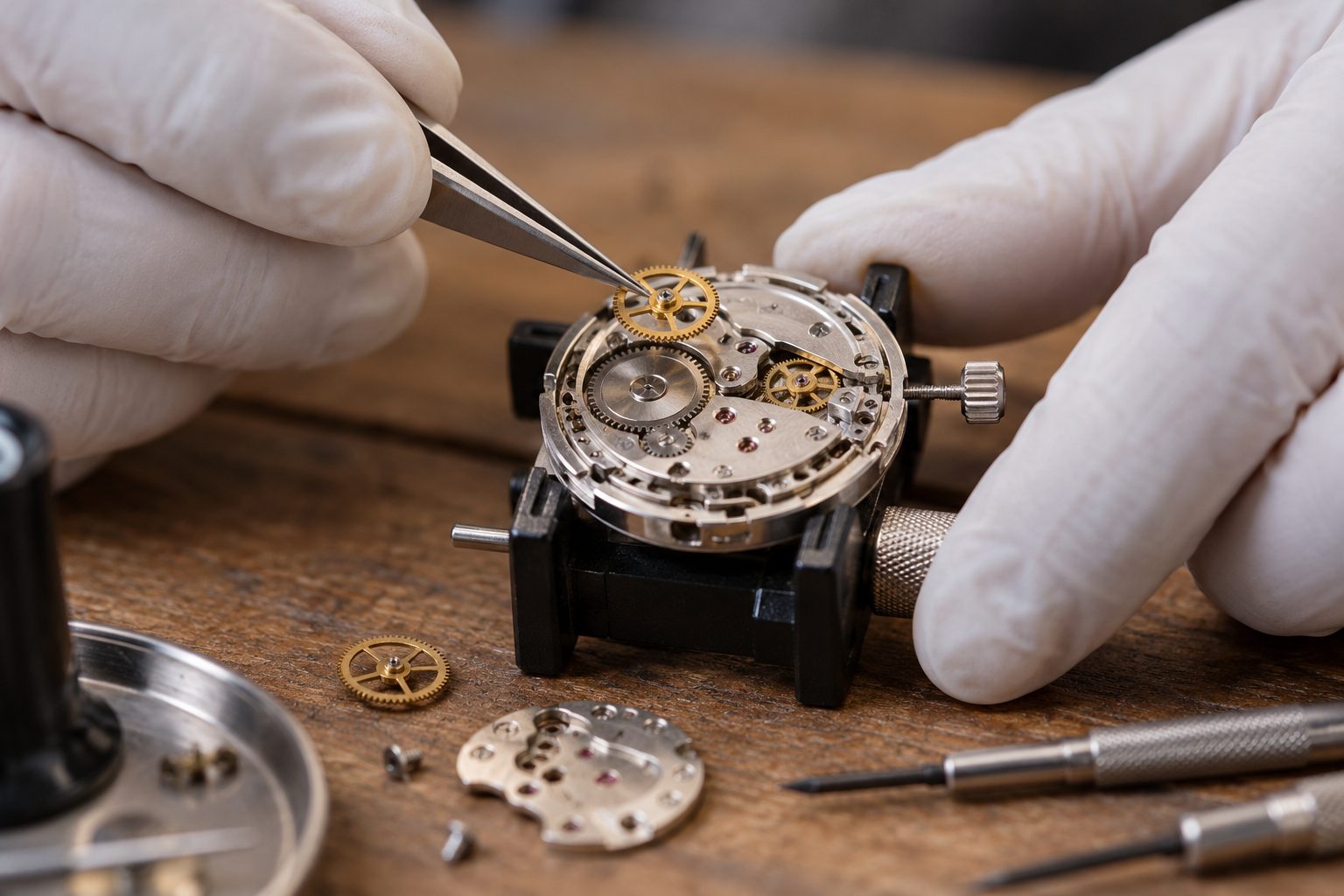
Rolex’s own procedure: the watch is examined and an estimate issued for approval before servicing. The movement is dismantled, cleaned, lubricated and regulated; components failing Rolex requirements are replaced. Rolex describes a two-year international service guarantee covering replacement parts and labour.[1]
TUDOR’s own procedure: a diagnostic examination leads to an itemised estimate. Following acceptance, the movement is disassembled and worn or damaged components are replaced with genuine TUDOR parts. The page describes an official Rolex/TUDOR service network and a two-year Service Guarantee after a complete service.[2]
An independent’s claim: SwissMade describes its own manufacturer accreditations, parts channels and two-year workshop warranty.[3] Confirm with the relevant brand that the named workshop is currently authorised for the model and proposed work. Accreditation for one brand should not be taken as authorisation for another.
For a specialist independent, ask about experience with the movement, the source and description of replacement parts, available tests and the workshop’s own guarantee. Obtain an assessment of the actual watch where vintage parts or previous modifications are involved. These questions do not imply that every older watch can be repaired.
The vendor comparison does not independently establish UK-wide price savings, manufacturer waiting times or the absence of every authorised independent option for a brand. Compare current estimates and the named provider’s written commitments.
Turn every estimate into the same worksheet
- Movement — What the estimate should answer: Diagnosis, disassembly, cleaning, lubrication, adjustment and reassembly: which are included?
- Parts — What the estimate should answer: Which replacements are included, what is their source, and how are additional charges approved?
- Tests — What the estimate should answer: Which timing, running and water-resistance checks apply, and what records will be supplied?
- Case and bracelet — What the estimate should answer: Is cleaning included, and is polishing or refinishing optional?
- Paperwork and cover — What the estimate should answer: Which invoice details, test results and written guarantee will you receive?
- Return and charges — What the estimate should answer: What happens after a rejected estimate, and who pays for storage and insured shipping?
Use included, optional, excluded and unknown as separate entries. An unknown charge should remain visible until the repairer answers it. Ask for the expected completion date and the procedure if parts availability changes it.
Approve parts and cosmetic work separately
Rolex describes case and bracelet polishing or satin-finishing as work performed on request.[1] TUDOR explicitly offers refinishing as an optional part of a full service.[2] Write down whether you want cosmetic work and identify any surfaces or features that should be left untouched.
A proposed job-sheet instruction is: “Please obtain my written approval of revised costs before ordering or fitting parts outside this estimate, and record a separate decision on polishing or refinishing.” Ask the workshop to accept that instruction. It is a requested condition rather than a promise that every manufacturer already follows an item-by-item approval process.
Photograph the watch before handover and record its identifying details and visible condition. If retaining or returning replaced parts matters, ask before approving the estimate; do not assume a workshop will return every component.
Check what testing and paperwork mean
Rolex describes precision checks, at least 24 hours of movement testing and water-pressure testing of the completed watch.[1] TUDOR describes vacuum and pressure tests in water, condensation detection, and final checks of power reserve and timing.[2] These are the manufacturers’ procedures; ask an independent what it will do for the particular model.
Distinguish performing a test from supplying a certificate. Request the method, date, result and any usage limitations in writing. If a result cannot be supplied, leave that comparison field unresolved rather than assuming a general “fully tested” claim provides it.
Ask for an itemised invoice identifying the work and parts, agreed test records, and complete guarantee terms. Maintenance records should not be used on their own to claim that every component is original to the watch.
Read the guarantee for the work you are buying
TUDOR’s Service Guarantee excludes accidental damage and inappropriate use. Its page states that intervention by a non-authorised third party or addition of non-TUDOR parts or accessories voids that Service Guarantee.[2] This describes the stated service-cover condition, not every consumer right or every warranty.
Before third-party work, ask the manufacturer about any existing cover you want to preserve. For the new service guarantee, obtain the start date, covered work, exclusions, claim procedure and responsibility for shipping cost and risk. A workshop warranty and a manufacturer guarantee are separate commitments.
Choose after the scope, total price, parts approvals, cosmetic decision, test records and follow-up terms are clear. A lower opening price is only comparable once the work left outside it is known.
References
- Rolex servicing procedure: estimate, movement, refinishing and guarantee (rolex.com)
- TUDOR after-sales service: estimate, optional refinishing and Service Guarantee (tudorwatch.com)
- SwissMade: its description of official and independent servicing (swissmade.co.uk)